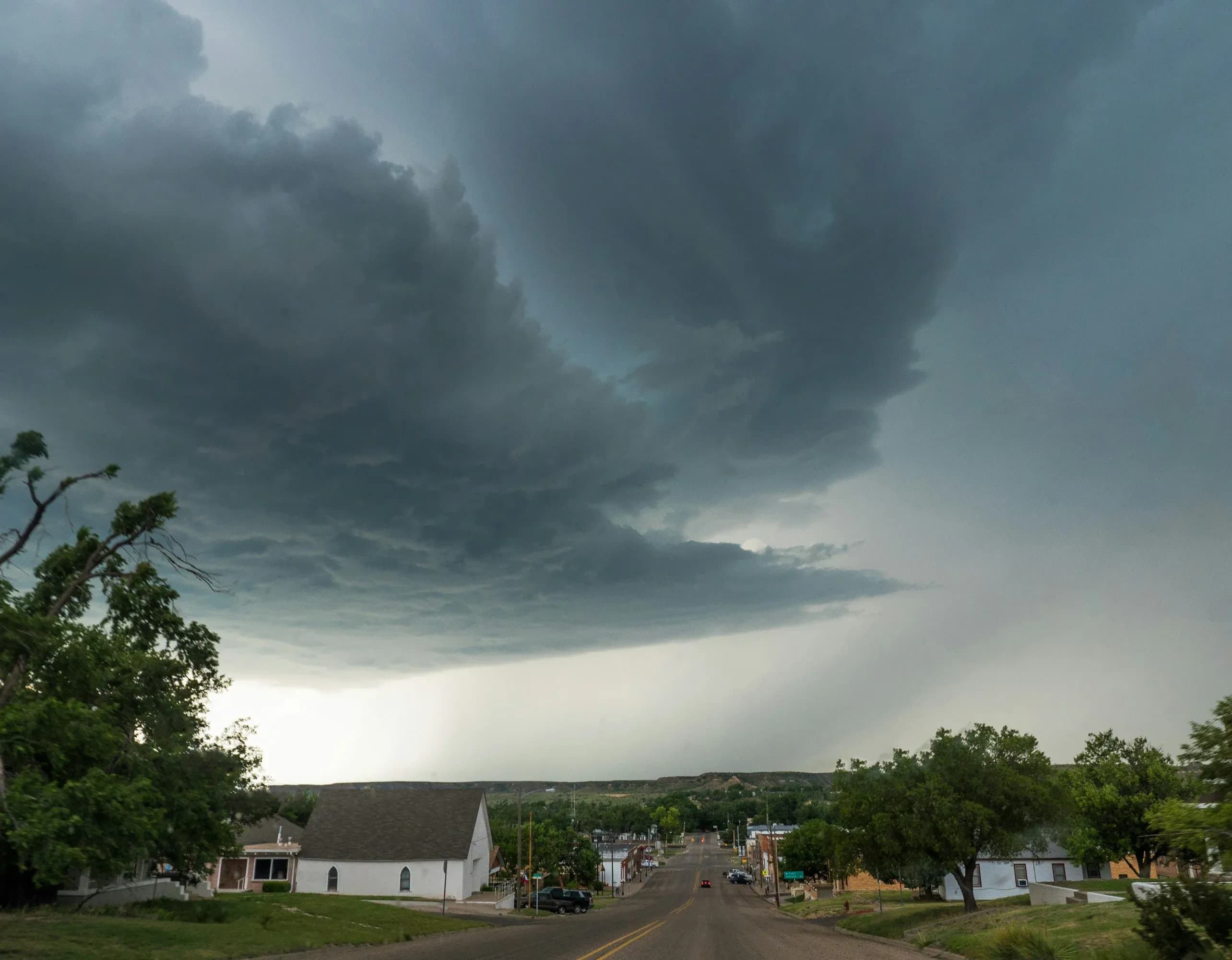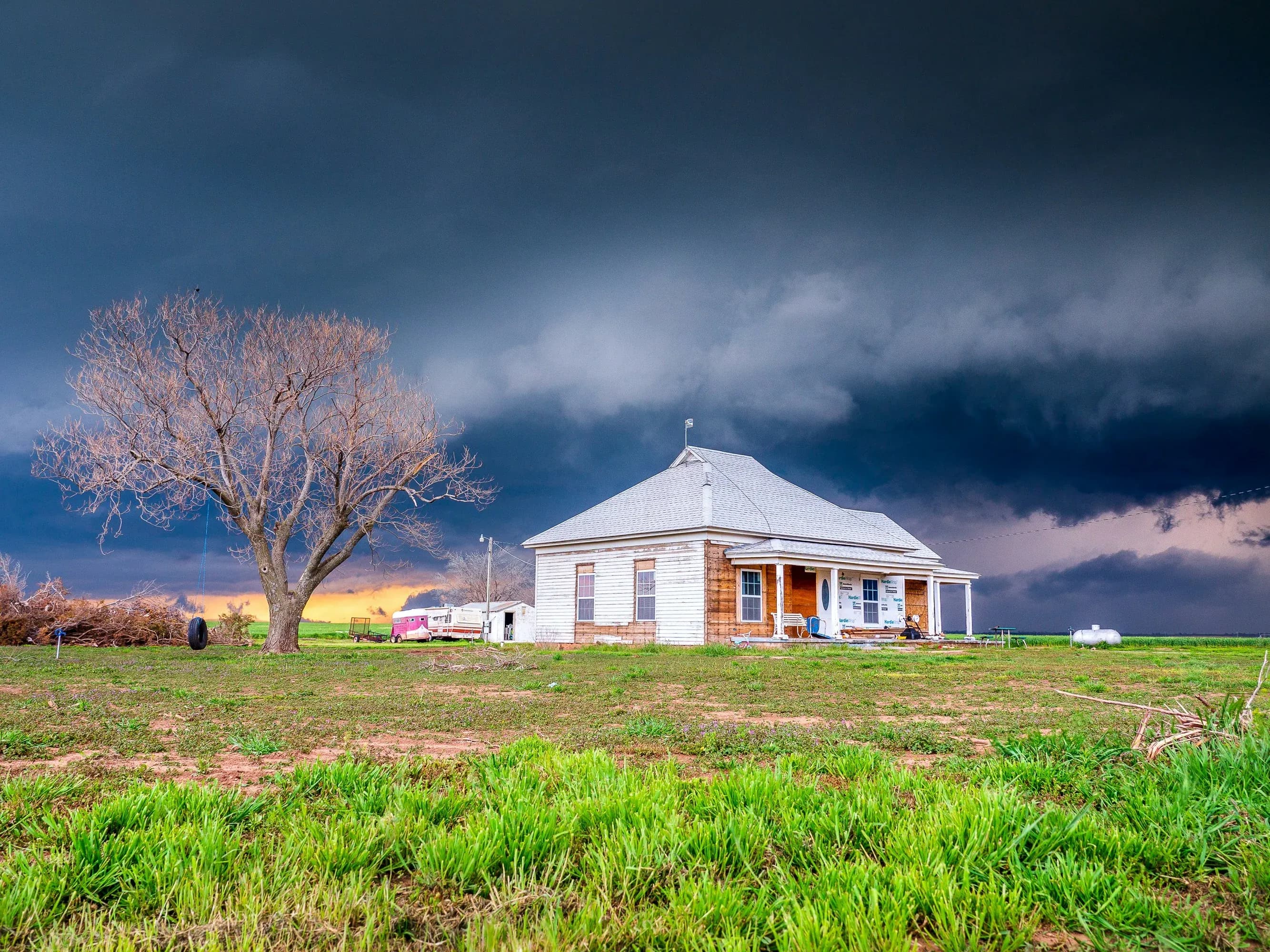
The five worst states for inland windstorms are Texas, Kansas, Oklahoma, Colorado, and Missouri. These Southern and Plains states see elevated numbers of tornadoes and other strong windstorms that can cause significant damage each year.
This list does not include Florida or Louisiana, the two coastal states that receive the majority of named storm activity making landfall.
Texas
The Lone Star State tops most weather charts on the basis of its massive size alone. There’s simply so much weather happening across so many square miles– it’s difficult for any other state to catch up without an extremely unusual year of weather occurring. With an annual average of 155 tornadoes per year and many other inland storms tearing through, including occasional East Texas derechos, the number of wind events puts Texas in the lead even discounting any coastal activity, which is also noteworthy. Texas sees storms of all types, including wind and hail, and its mostly flat geography means that these events can tear across the state without losing much force to the landscape.
Kansas
Seated in the middle of Tornado Alley, Kansas absorbs the impacts of multiple bands of convective storm activity every spring and summer. Significantly smaller than Texas, Kansas still sees nearly 100 tornadoes per year on average. In addition to being the home of The Wizard of Oz’s Dorothy Gale and her family home, famously lifted into another land by a tornado, Kansas has also been the site of many historical and destructive tornadoes and other windstorms. An EF5 tornado in 2007 destroyed most of the town of Greensburg, Kansas with little warning.
Oklahoma
There’s a reason why multiple storm tracking and measurement organizations are located in Oklahoma. There’s no shortage of data for them to process. Sharing many geographical similarities with North Texas, with which it shares a border, the Sooner State also shares a number of storm-friendly conditions. Oklahoma averages 68 tornadoes per year and tends to be the source of the most powerful storms seen across the Plains states, with a tally of over 60 EF4+ storms recorded since 1950.
Colorado
Frequent thunderstorms in Colorado often bring fierce windstorms and large, damaging hail with them. This combination of effects keeps the Rocky Mountain State in the public eye through much of the year. Its proximity to the Rockies and cold air rushing down across the states from Canada keeps storm conditions active nearly year-round. This includes frequent blizzards during the spring months, with windstorm-blown snow making life difficult for Colorado residents for weeks at a time.
Missouri
The Show-Me State continues to show off year after year during its especially active hail and windstorm season, which starts in the early spring and tends to last throughout the summer. The early fall months also often bring storms back to the state, with a lesser burst of activity keeping Missourians on their toes right up to the early winter. Missouri’s high wind- and thunderstorm count occurs because of where the state sits on the map: at a central location where warm, wet air from the Gulf of Mexico is close enough to run up against colder, drier air from the North. Derecho windstorms, a fast-moving type of straight-line windstorm, are also more common in Missouri.
This ranking intentionally excludes Florida and Louisiana.
Based on The Farmers’ Almanac’s ranking which took into consideration data from the NOAA, the NWS, and the National Hurricane Center.
Get a quote today for windstorm insurance to protect your home from wind and hail damage.
Sources:
Morley, Josh. “10 Worst Weather States in the US: Ranked by Tornadoes, Hurricanes, and Hail”, Farmers’ Almanac, July 27, 2026, https://www.farmersalmanac.com/worst-weather-states

Gray is the Senior Content Specialist at Sola Insurance, working with the Sales and Marketing teams to provide helpful, valuable content for homeowners and agents. Gray has worked previously in finance, logistics, and advertising.