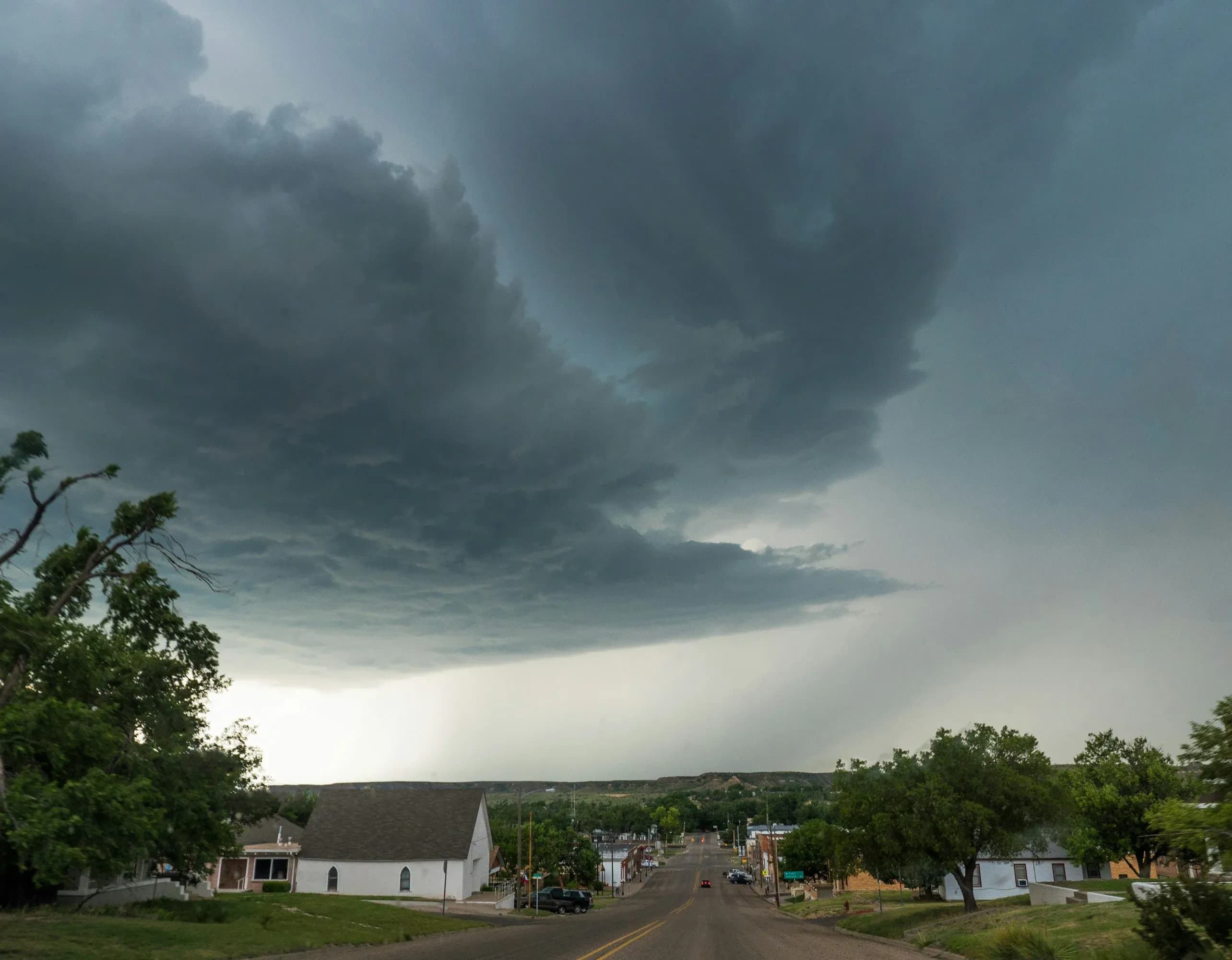
Deductibles increase to match risk levels across the United States
Wind and hail deductibles are increasing for homeowners across the United States as insurance providers look to find ways to accommodate policies in higher-risk areas without raising other costs to unaffordable levels for the homeowner public.
Insurance Deductible - The amount you’ll pay out-of-pocket to meet the requirements of your insurance provider’s policy; after this has been paid, your policy will cover the rest, up to the limit of your coverage.
Weather plays a major role in wind/hail deductible pricing
Increasingly severe weather patterns seen across the country, but especially in the Midwestern and Southern states continue to drive up risk levels in these regions. Hurricane damage in the early 2000s was a turning point for many insurance providers, leading to the creation of a separate wind and hail deductible included with most homeowners insurance policies.
Weather risk is the primary driver of these increasing prices, but other factors are part of the equation as well. Existing risk history associated with a structure is reflected on the CLUE loss history record of each building, and those events stay on that history for up to seven years. The type of structure to be insured is also considered when deciding the details of a property insurance policy.
CLUE Report - It’s like a credit report for your insurance and loss history. While your credit score can influence your ability to buy things on credit, your CLUE record can prevent you from obtaining insurance coverage, or cause that coverage to be more expensive.
Can I get property insurance without a deductible?
Homeowners insurance policies require a deductible as a general rule. More specifically, many states have regulations that require insurers to present the wind and hail deductible as a separate payable within each policy. Pulling out the higher risk of wind and hail claims for its own pricing lets insurance carriers keep the costs of the rest of their coverage at more attractive levels.
Wind and hail deductibles are more commonly being defined as a percentage of the home’s value. These amounts are frequently based on 2%, 3%, or even 5% of the total value, which can mean deductibles of $10,000 or more may be owed by a homeowner before their home insurance provider pays a single dollar towards needed repairs.
How many claims are based on wind and hail damage?
The majority of homeowners insurance claims in the United States–nearly half of the claims filed in 2020–are wind and hail related. Also based on 2020 data, one in 35 homes was impacted by windstorms or hailstorms that resulted in damage significant enough to prompt a claim on home insurance policies. The average payout for these types of claim was approximately $15,000 in the years 2019 through 2023.
Number of Hail Claims by State, 2016-2018
- Texas (811,381)
- Colorado (395,025)
- Nebraska (163,336)
- Missouri (153,403)
- Kansas (146,206).
Other weather events and natural disasters such as fire, flooding, and freezing have lesser impacts on homeowners as a group, but they all represent significant percentages of the total claims filed each year.
Is a deductible buyback a good option?
For homeowners facing high deductibles, an add-on to their home insurance policy called a deductible buyback is one option for lowering the financial risk of home ownership. By paying a higher premium up front, the policyholder is able to ‘buy back’ some of the deductible that they would owe if they made a claim. Buybacks (also called buy-downs) typically lower the deductible to a set amount, often $1000 or $2500. This can make for a less stressful scenario, but it does not eliminate the deductible completely.
An alternative to buybacks and high deductibles
An independent wind and hail policy from Sola Insurance offers a greater range of flexibility in how it is used and in the dollar amount of coverage provided. Policies can be written anywhere from $2,000 to $25,000, and the payouts can be used to help cover the cost of a wind/hail deductible, to cover the gap left by a traditional homeowners policy that only provides ACV coverage for a roof, or to pay for repairs altogether if the policy is sufficient.
Make a point to understand how your existing wind and hail coverage works and determine the potential deductible cost that you would owe after a claim. With this information in mind, you can ask your independent agent about how to use Sola coverage to avoid paying out-of-pocket after a storm.
The standalone wind/hail coverage option can also avoid the requirement of filing a claim on your home insurance policy. With no claim on a traditional homeowners policy, the policyholder can avoid any unwanted marks on their insurance history and the potential impact those could have on the way insurance companies see them in the years to come. This is another way to address the challenge of rising wind and hail deductibles without affecting your financial standing or your perceived insurability.
Summary
Home wind and hail deductibles continue to rise to match increased weather risk that comes with climate change across the country. These deductibles are an unavoidable part of homeowners insurance coverage, but there are options for policyholders who wish to avoid paying them out of pocket. Deductible buy-downs can mean a lower deductible, but their use is strictly limited. A standalone policy like Sola Wind & Hail offers complete coverage of higher percentage deductibles and related costs that come with storm damage, and is free from negative consequences that can result from traditional home insurance claims.
Updated: June 16, 2026
Sources:
Cahill, Emily. “The 7 Most Common Homeowners Insurance Claims” Experian Blog, Aug. 11, 2022, https://www.experian.com/blogs/ask-experian/most-common-homeowners-insurance-claims/
“NICB: Top States for Hail Claims” III, Triple-I Blog, Aug. 06, 2019, https://resilience.iii.org/resilience-blog/tornadoes/nicb-top-states-for-hail-claims/

Gray is the Senior Content Specialist at Sola Insurance, working with the Sales and Marketing teams to provide helpful, valuable content for homeowners and agents. Gray has worked previously in finance, logistics, and advertising.