Most home purchases in the U.S. are driven by price and the potential buyer’s sense of style, not the type of construction or the building materials used.
It’s not always the first thought on signing day for a home purchase, but construction type and materials play a significant role in the buyer’s relationship with their home after the deal is done. Resale value, financing options, and the durability of the home itself are all defined by these details, though those impacts may not come into play immediately.
Common home construction types in the U.S.
Climate and construction material and skilled labor availability variations across the U.S. mean that the over one million homes built each year include a range of construction types and formats. Though there is a clear leader that makes up the majority of those homes, buyers do have a choice, and those options are worth considering.
The common home construction types that make up the majority of American homes include:
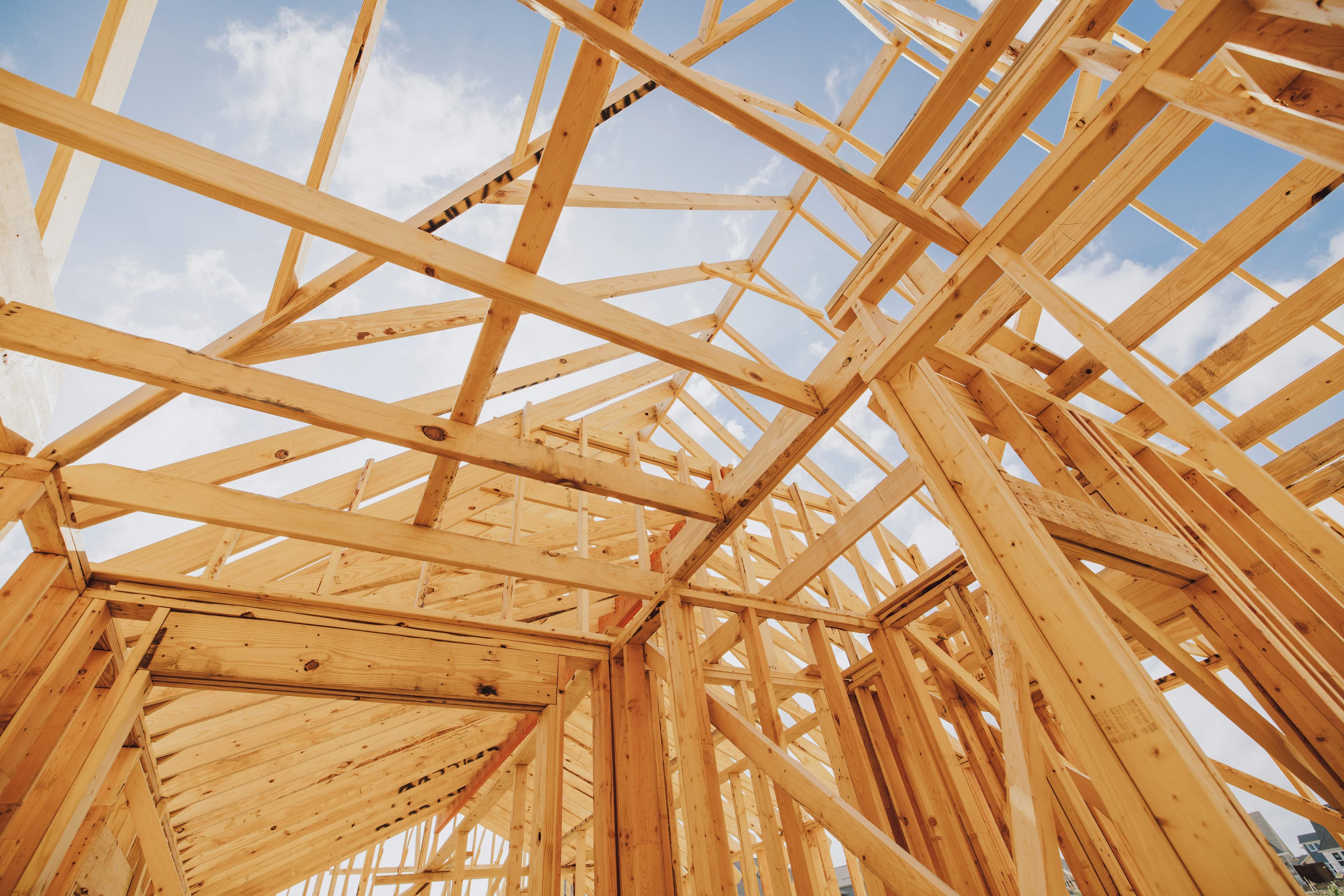
- Wood/stick frame (the U.S. default, >90% of new homes)
- Masonry (brick, stone, concrete block)
- Joisted masonry (masonry walls, wood floor/roof; a hybrid method)
- Concrete (poured, Concrete Masonry Units/CMU, and Insulated Concrete Forms/ICF)
- Steel frame
- Manufactured homes (HUD Code compliant, built on a permanent chassis)
- Modular homes (built to local/state code, set on a permanent foundation)
Costs to insure homes and how they vary with construction type
The scale of construction types and their relative durability is spelled out in how they are viewed and ranked by insurance companies. Frame construction, though popular, sits lower on the insurability scale due to its relative flammability as compared to masonry or concrete-based constructions. Hybrid construction types, such as joisted masonry, sit somewhere in the middle of the insurance favorability scale.
There are also regional risks that can affect homes of all types in an area–one that is especially prone to a specific peril–tornado, wildfire, or earthquake, for example.
Financing and appraisal of different home construction types
Another long-term impact that homebuyers are advised to keep in mind while shopping is the property classification of the home. Site-built homes of all construction types are considered ‘real property’ along with the land where they sit, and any other element of the property such as plants, outbuildings, or landscaping. Real property can be owned but cannot be moved.
Personal property, and more specifically the category of ‘chattel’ includes owned property that can be moved. The specifics of this definition can vary by location, but generally will include manufactured or mobile homes, meaning that these categories may be taxed and financed differently. Chattel financing options specifically written for manufactured homes are available in most cases.
Real Property | Personal Property | |
Defined | Owned property with a fixed location and address. | Owned property that can be moved. |
Home Examples | The house, a fence, an outbuilding, an in-ground pool, landscaping elements | A mobile home, lawn tools, free-standing furniture and appliances, TVs |
Financing Type | Mortgage | Personal Loans (Chattel) |
Taxation | Owner pays Real Estate Property Taxes | Owner pays Personal Property Taxes or state sales tax |
Means of Transfer | Transfer of a Deed | Transfer via a Bill of Sale |
This difference in property type can mean significant differences in financing options for the buyer and seller, and will also likely affect the home’s appraised value. Site-built homes of all types are appraised to local standards, regardless of their origin being a ‘stick’ build or a manufactured home that was installed permanently on a site.
Mobile and manufactured homes that are not permanently installed in one location are subject to the chattel valuation described above. These homes have their value assessed through the use of a price book that works similar to the Kelley Blue Book does for cars. They may also face zoning restrictions that affect their placement and limit access to favorable financing terms, meaning the buyer must make use of personal loans with higher interest rates and shorter timespans.
The energy efficiency of the home can also lead to more favorable mortgage terms. Mortgages written specifically for more efficient concrete/ICF construction homes provide allowances for a portion of the homeowner’s budget to be used for efficiency improvements. Used in another way, an Energy Efficient Mortgage (EEM) agreement could mean that the homebuyer is able to purchase a higher quality home thanks to lower utility costs that come with a more efficient home.
Resale value and appreciation rates of American homes
The resale value of a home is the highest priority for many homebuyers who consider their equity in the home and the potential for eventual profit to be the biggest reason to buy a home instead of renting.
Real estate stereotypes around the value and appreciation of manufactured homes have cast a negative light on those homes for years, but post-2012 data from the Federal Housing Finance Agency (FHFA) with analysis from the Urban Institute shows manufactured home values on owned land matching that of site-built homes to within a single percentage point. Site-built homes appreciated by 212% between 2012 and 2024, with manufactured homes on owned land adding 211% in value over the same period.
This reporting reinforces the idea that the fiscal future of a home is not always the ultimate deciding factor for many homebuyers. Style and purchase price remain atop the list of selling points, even with expert guidance suggesting other priorities as the most valuable ones to consider.
Following this discussion, the value of the land and its appreciation are the primary considerations. While there is real value to be found in manufactured homes, that category of homes cannot fully stand on its own (that is, on un-owned land) against frame-built or masonry-built homes on the same land.
Manufactured homes are also most likely to face resistance from municipalities and local residents over their placement in some areas. In many cases a special exception is required to such a home to sit alongside more traditional construction homes, even if the values are equivalent on paper.
Durability of home construction types compared
As most people remember from an old story about three little pigs and one wolf, there are many ways to build a house, and they each have their own strengths and weaknesses.
Wooden, frame-built homes are less costly, and can be built more quickly, but can be vulnerable to pests, moisture intrusion issues, and rot if not properly maintained.
Masonry-built or brick homes are more durable and require less upkeep. They are longer lasting than wood, but when damage does occur, the repairs cost more and are more difficult.
Concrete or ICF homes are the most durable construction available. They’re generally the most expensive to build (due to materials costs and skilled labor needs) and are also difficult to repair.
Steel-construction homes are very strong and stable, but they can suffer from several temperature-related issues including corrosion on structural elements and condensation on interior surfaces if they aren’t properly insulated.
Manufactured homes may not be built in the same way as these home types, but still present some of the same weaknesses of steel- and frame-built homes, including corrosion and condensation. These can be addressed with proper ventilation and insulation.
Energy efficiency and climate comfort of home types
Brick and concrete constructions are the most similar in energy efficiency comparisons, with insulated wooden frame homes sitting at the other end of the scale. While the brick and block-built structures are the best at retaining warmth in cold weather, they can also be the most difficult to cool down during warm summers.
Homebuyers weighing construction types before a purchase should consider which build suits their potential hometown best. Are there annual weather conditions that are basically a known constant that can be planned around? Gather the information you need to make an informed decision, and ask questions whenever necessary to fully understand the conditions you’ll be living with.
Weather, environmental, and efficiency factors can all raise or lower the long-term costs that come with a new home. See the following data around climate-based home decisions below and consider your options from that point.
Disaster and weather resistance of common construction types
Some parts of the country can be affected by different perils that may be uncommon or even completely unheard of just a few states away.
Common examples include the high risk of strong winds and the associated weather that the coastal states–especially those in the southeast–must be constantly aware of to keep their families and homes safe.
Less commonly, certain Western states including California and Oregon face a heightened risk of both wildfires and earthquakes, worries that are almost never a threat for the majority of the country. In considering a home in Oregon, for example, the right choice of home construction type can make a significant difference in someone’s life for years. The safety of their home becomes either a constant worry or a calming reassurance.
When you consider the regional differences at play across the American homebuying market, there is rarely one type of home construction that is always the right pick. Consider the region in which you’d like to buy. Talk with real estate professionals and other homeowners, and ask questions. The perfect home is likely to vary with your new home address.
Practical advice for new homebuyers
Homebuyers looking to follow the logical guidance provided here to find the most beneficial type of home for their next purchase can consider taking a few easy steps the next time they visit a for-sale home to gather information.
- Ask questions of the owner or the agent presenting the home.
- Ask about the construction type of the home. Some elements may not be clear after a quick walk through.
- Confirm the type of property the home is: real property or personal property/chattel.
- Ask if they’re aware of any local hazards that would affect the longevity or the upkeep of the home.
- Request competitive local insurance costs as soon as possible; these numbers should be provided without issue.
- Follow these tips for spotting different construction types on a walkthrough.
- Wood-frame construction: Note exposed studs in the wall if any unfinished areas are available to view. Nails and screws attaching drywall to the studs behind it may be visible.
- Joisted masonry (hybrid) construction: Note exterior walls of brick or other fire-resistant construction.
- Brick/masonry construction: Exterior brick walls; note wall thickness at door jambs; brick walls are typically 2-3 bricks or 6-9 inches thick, and exterior brickwork will be tied into the foundation of the structure.
- Steel construction: Exposed steel beams in unfinished areas like closets or a garage; these can also be tested for with a strong magnet against drywall. Visible galvanized steel studs seen near plumbing or HVAC areas.
- Keep these differences in construction type in mind, including their benefits and drawbacks. Spending more for the right home can pay off more over time than any extra expense incurred at the time of purchase.
Conclusion - Deciding what matters the most
Before you make the decision to buy a home, whether it’s an existing home or new construction, keep your focus on the potential for comfort, safety, and efficiency in the years to come. While ‘curb appeal’ obviously plays a part in falling in love with a home, cosmetic changes can be made to match your preferences down the road.
Understand the benefits of the construction types used in your area and how any potential drawbacks could affect your lifestyle as a homeowner. Keep the emphasis on the drivers of homeownership’s so-called ‘hidden’ costs and you can avoid getting caught unaware by surprise costs, insurance changes, and tax requirements that trip up many others.
As a final safeguard, always request that exhibiting agents share the construction type of each home being shown, and that competitive insurance quotes are provided before any such rights are waived or any part of a deal is signed. With these details in hand, you can be significantly better prepared to get the best deal and to end up in a home that will be the right fit for you and your family for years to come.
Last Updated: July 22, 2026
Sources:
“Real Property vs Personal Property” Block Advisors, Jan. 19, 2025, https://www.blockadvisors.com/resource-center/manage-your-business/real-vs-personal-property/
“What to know about construction costs” Truist Mortgage, https://www.truist.com/resources/mortgage/articles/building-a-home-vs-buying
Garcia, Manny. “New Construction Buyers” Zillow.com, Nov. 22, 2023,
https://www.zillow.com/research/consumer-trends-new-construction-buyers-2023-33419/
“ICF Construction for Homeowners in Georgia” Green Harbor Building Systems,
“Why Modular Homes are Appreciating and Accelerating Homeownership” MCM Companies, https://www.mcmcommunities.com/do-modular-homes-depreciate

Gray is the Senior Content Specialist at Sola Insurance, working with the Sales and Marketing teams to provide helpful, valuable content for homeowners and agents. Gray has worked previously in finance, logistics, and advertising.