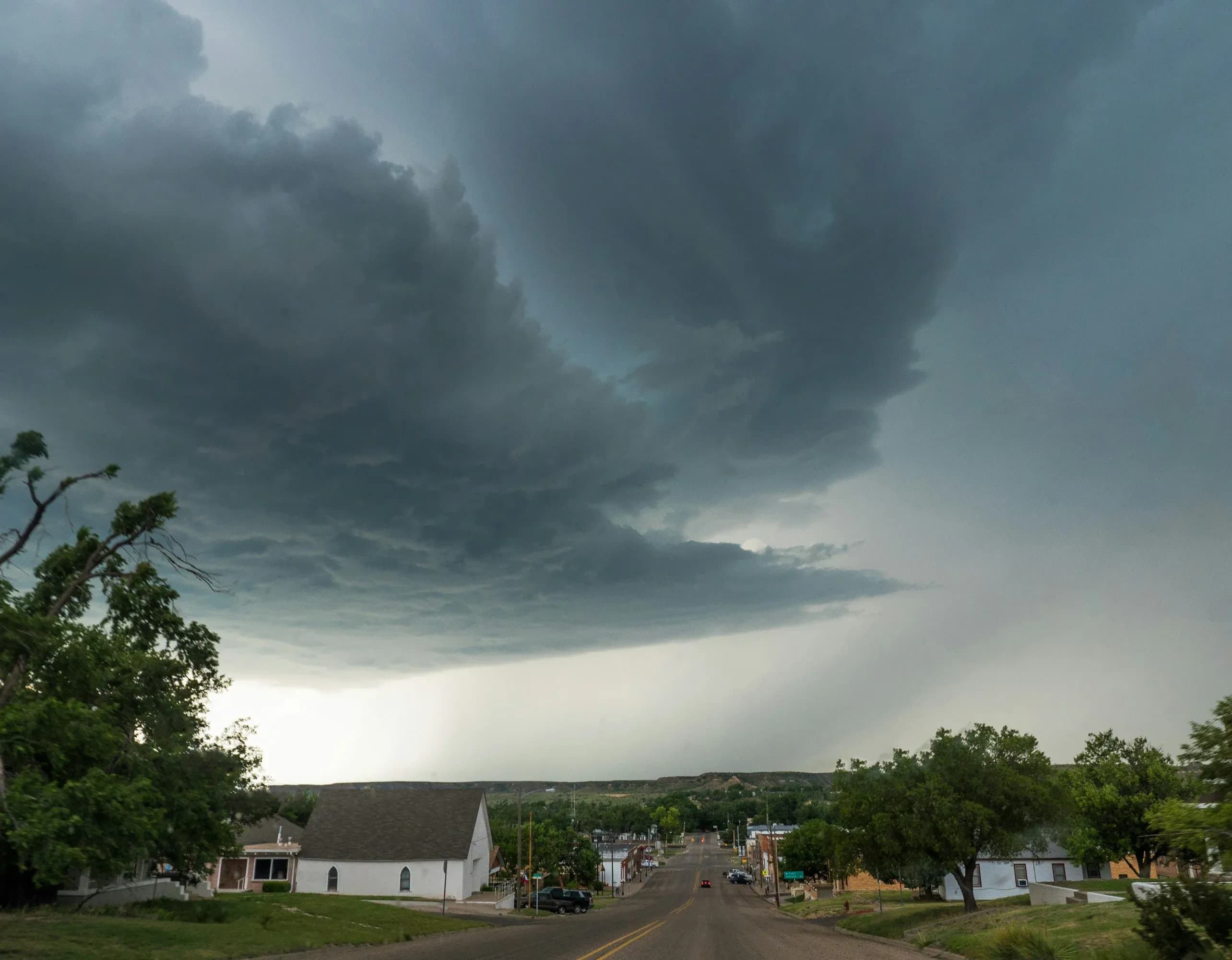
Yes, traditional homeowners policies typically include a wind and hail damage clause that is required not by law, but by the regulations of the mortgage lenders that finance home purchases. The wind/hail coverage may be priced with a separate, percentage-based deductible, or it can be excluded altogether.
Do you own your home?
If you own your home outright, you won’t face the responsibilities to a lender that you would have during the purchase process. Homeowners who are still in the process of paying off their mortgage are under the obligation to keep their home insured, maintained, and repaired in the case of disaster. Maintaining a home policy offers benefits including protection in case of fire, better prices on future insurance purchases, and improved status in the eyes of all insurance companies from that point forward.
How does your home insurance policy handle wind and hail?
In most states, wind and hail coverage is one of the named perils included with the other provisions of your homeowners insurance policy. In states with higher risk levels for wind and hail however, this coverage is priced separately, with its own deductible pricing called out from the rest of the policy.
Additionally, some policies cover wind and hail perils in different ways. The ideal coverage for a residential roof is called Replacement Cost Value or RCV. This means that a claim on the policy pays out 100% of the cost to replace or repair the damaged structure at today’s prices.
Other home insurance policies offer Actual Cash Value coverage for roofs or other frequently replaced parts. An ACV payout is for the current (or ‘actual’) value of the asset with wear and age depreciation applied. This may amount to a small fraction of what would be needed to replace a destroyed roof on an older home, for example.
Payout calculation | Amount of repair cost owed | Premium | |
RCV Coverage | Full Recovery Cost, often in two payments: Actual Cash Value paid first, ‘recoverable depreciation’ paid once work starts. | Average cost: $0 of $10,000 | Higher than average |
ACV Coverage | Recovery Cost - depreciation - your deductible = Actual Cash Value paid | $10,000 - 60% depreciation - $1,000 deductible = a $3,000 payout, with $7,000 owed out-of-pocket | Lower in most cases |
What is a wind/hail deductible and how is it calculated?
Historically, most home insurance deductibles were ‘flat rate’ prices that would stay the same price for any policy of one type. Over the last two decades, it has become more common for homeowners deductibles, and especially wind and hail deductibles, to be calculated as a percentage of the total home value. This means that someone with a home valued at $400,000 with a 3% deductible would owe $12,000 out of pocket before their insurance company paid its first dollar toward the repairs.
What does a wind/hail claim cost you out of pocket?
Flat-rate | Percentage deductible | |
On a $400k home | $1,000 fixed | 3% = $12,000 |
Out of pocket after a hail claim | $1,000 | $12,000 |
Do you have enough coverage?
Speak to your insurance agent to make sure you understand everything that your current homeowners policy covers. Has the value of your home changed? How about the belongings within? Take these answers into consideration as you discuss your current home insurance needs and any gaps in coverage that may exist.
A common guideline is to buy insurance sufficient to cover the complete replacement of your home if a catastrophic event occurs. If you also use supplemental coverage for your roof or any other part of your home, include that in your insurance ‘big picture’ review.
How can you pay less on a wind and hail claim in 2026?
There are several ways to lower your home insurance costs in the coming year. By talking with your insurance agent, you should be able to negotiate a lower monthly premium by accepting a higher deductible cost on your home policy. This means you are taking on more risk in the event of a claim, but paying less cash up front, so you can use that money on other needs.
Another way to pay less for home insurance is to change from an RCV policy to an ACV, ‘actual cash value’ one that pays out the depreciated value of your home or roof when you make a claim. The premiums for an ACV policy will be significantly lower than those for RCV.
In either of these situations, the money you saved by paying less in premium costs can be used to purchase a standalone wind and hail insurance policy from Sola that can help you cover the higher deductible or the gap in your coverage between ACV and RCV payouts.
Other benefits of a standalone Sola policy:
- Claims are not reported to the CLUE and won’t show up on your insurance history.
- No insurance history marks means a Sola claim won’t impact your insurability in the future.
- Making a claim won’t cause your Sola prices to go up or cause Sola to drop your policy.
- Sola policies work with any other home insurance coverage, but are sold separately.
Ask your insurance agent about these options when you’re reviewing your current home insurance policy to confirm that wind and hail coverage is included and that it’s providing the financial protection you need to recover from severe weather damage.
Updated: August 12, 2026
Sources:
“What is Windstorm Insurance?” Texas Dept. of Insurance, June 01, 2026, https://www.tdi.texas.gov/tips/what-is-windstorm-insurance.html

Gray is the Senior Content Specialist at Sola Insurance, working with the Sales and Marketing teams to provide helpful, valuable content for homeowners and agents. Gray has worked previously in finance, logistics, and advertising.