Tornado Season Is Coming: Here’s How to Keep Your Family Safe
In the United States, tornado season typically begins in March, running through the spring. Secondary spikes in tornado activity in the fall, usually during October and November, are also common in many states. With multiple shifts in the weather and more opportunities for a tornado touching down every year, it’s worth taking a few minutes to think about how you can keep yourself and your home safe. Tornadoes can be unpredictable and incredibly dangerous, but preparing ahead of time can make all the difference.
Prepare Before the Storms Arrive
If you live in a tornado-prone area, preparation is your first line of defense. Stock up on essentials now, before severe weather hits. This includes items like non-perishable food, bottled water, flashlights, batteries, blankets, sturdy shoes, and helmets. Keep everything in a place that’s easy to grab quickly. Think of it as a small investment of time that could pay off in a life-saving way later.
Find the Safest Space in Your Home
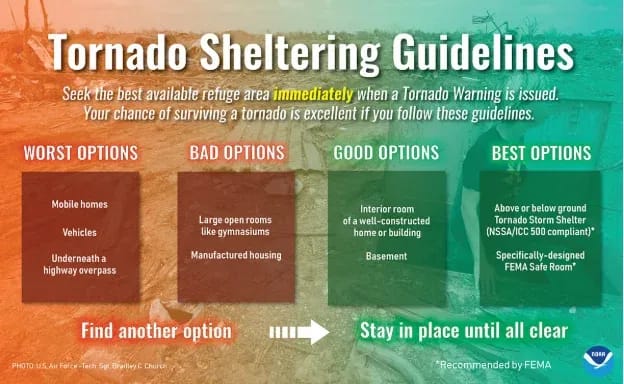
When a tornado warning is issued and you’re inside your home, your priority should be getting to the safest possible location. Keep in mind that the more walls between you and the outside, the better.
If you have a basement, that’s ideal. If not, choose an interior room on the lowest floor with no windows. Popular options include a central closet, a small bathroom, or a hallway. One Reddit user even suggested placing children in a bathtub in a small enclosed bathroom and, if time allows, pulling a mattress over the top for extra protection.
Windowless rooms and narrow, enclosed spaces are safer because they offer more structural support. Broken glass from windows can become extremely dangerous during a tornado, so avoiding areas with windows is key.
Additional Safety Steps to Take
Beyond finding a sheltered room, there are a few extra precautions that can add another layer of protection:
- Crouch low and take cover under something sturdy, such as a heavy table or bench.
- Shield your head and neck with a helmet, mattress, cushion, or thick blanket.
- Avoid rooms located beneath heavy objects. For example, don’t take shelter directly under a room with a piano, large sofa, or heavy furniture. If the floor collapses, those items can cause severe injury.
Tornadoes can strike with little warning, but a bit of preparation and a clear plan can dramatically increase your chances of staying safe. By stocking up on essentials, identifying the safest spots in your home, and knowing how to protect yourself during the storm, you empower your family to respond confidently in a high-stress moment. Stay safe, stay alert, and stay prepared.
Sources:
“Tornado Safety”, National Weather Service, https://www.weather.gov/mqt/tornadotips
Field, Carla. “5 best places to be in your home during a tornado”, WYFF, Apr. 03, 2024, https://www.wyff4.com/article/5-best-places-to-be-in-your-home-during-a-tornado/9236598

Gray is the Senior Content Specialist at Sola Insurance, working with the Sales and Marketing teams to provide helpful, valuable content for homeowners and agents. Gray has worked previously in finance, logistics, and advertising.


